Fantamon: Idle RPG
- 4.1
- Rating
- 100.00K
- Installs
- Free
- Price

 Analysis by App-foxy
I spent time with Fantamon: Idle RPG as a light, adventure-focused game built around the idea of making progress without demanding constant attention. That distinction matters. This is not the sort of role-playing game I would choose when I want detailed manual combat every few seconds. I would choose it when I want a colorful team adventure that can fit around a commute, a lunch break, or a few spare minutes in the evening.
Developed by Shengqu Games, the game has a friendly presentation and an easy starting point. It is free to download, aimed at players aged 10 and over, and currently listed as version 1.41 for devices running Android 7.0 or later. Its public reception sits at a 4.1 average from around 1,500 ratings, with more than 100,000 installs, so it has already attracted a modest community without feeling like an overwhelmingly crowded mainstream title.
How Fantamon feels when you play in short sessions
The strongest part of the experience is its suitability for interrupted play. I can imagine opening it while waiting for an appointment, checking the team, collecting progress, and making a few decisions before putting the phone away again. That rhythm is more important here than trying to rush through every encounter. The game’s idle identity suggests that progress is meant to continue between active visits, making it a natural fit for people who enjoy gradual improvement rather than long uninterrupted sessions.
You May Also Like

 AccuWeather: Weather Radar
AccuWeather Review: A Quick, Clear Forecast for Everyday Decisions
For everyday plans, the best forecast is the one you can understand quickly. AccuWeather makes rain timing, radar, and local conditions easy to act on, with a few trade-offs.

 Hill Climb Racing
Why Hill Climb Racing Still Turns Crashes Into One More Run
A tiny car, a bumpy hill and one more upgrade: Hill Climb Racing keeps resurfacing because its simple chaos makes every near-miss feel personal.

 AliExpress - Shopping App
AliExpress Makes Global Shopping Feel Personal, but Shoppers Bear the Risk
AliExpress turns a global marketplace into a pocket-sized discovery engine. Its reach is useful, its shopping loop compelling, and its trade-offs easy to miss.

 Lords Mobile: Kingdom Wars
Lords Mobile Is a Kingdom-Building Routine, Not a Quick Match
A case-by-case verdict on the building, battles, device demands, and social commitments that make Lords Mobile rewarding for some players and exhausting for others.

 PDF Scanner app - TapScanner
TapScanner Makes Paperwork Easier to Capture, Check, and Share
TapScanner makes scanning with a phone feel less like a rescue operation and more like a dependable step in getting work done. Its capture tools are useful, though not flawless.

 Block Blast!
 Shows How Much a Puzzle Game Can Leave Out
A quiet grid game shows why puzzle players increasingly value instant clarity, repeatable skill and low-pressure play—and where the genre still needs to catch up.
More From Our News Desk
View All News


That also shapes my expectations about speed. The game feels best when I treat advancement as a steady routine, not as a race. Players coming from action-heavy adventures may initially find the pace restrained because the appeal is less about direct reflexes and more about returning to a growing team. If you prefer immediate control over every attack, this may feel slower than a conventional combat RPG. If you like checking in, adjusting your approach, and seeing your group become more capable over time, the pace is much easier to appreciate.
One practical habit makes the idle structure more enjoyable: I would avoid spending every reward the moment it appears. Keeping a little flexibility for the next meaningful upgrade gives each visit a purpose. Instead of tapping through everything automatically, I found it more satisfying to decide whether the current improvement would help my team immediately or whether saving resources would create a stronger jump later. That small pause turns routine collection into an actual planning choice.
The worldwide team-up angle also gives the game a social flavor that separates it from a completely solitary idle title. I would recommend approaching that side as a reason to keep checking in rather than assuming it will replace a full multiplayer adventure. The appeal is having a broader sense of playing alongside others while still enjoying a manageable, low-pressure loop. For a player who wants a relaxed adventure with a community atmosphere, that balance is attractive.
What happens during longer or heavier play
Short visits are where the concept makes the most sense, but heavier use deserves a more careful look. Spending a long stretch actively managing a game designed around idle progress can expose a mismatch between the player and the design. If I sit down expecting constant discoveries, rapid battles, and a large stream of new decisions, the experience can begin to feel repetitive. The game is more convincing when active play is used to guide progress, not when it is treated like a traditional action session.
There is also a useful trade-off between convenience and involvement. Idle systems reduce the pressure to remain on screen, but they can make each individual visit feel less dramatic than a manually controlled adventure. I would not describe that as a flaw by itself. It simply means the game rewards consistency. A player who checks in regularly and makes deliberate improvements is likely to get more from it than someone who only opens it occasionally and expects every session to deliver a major event.
For everyday use, I would divide play into two modes. During a busy day, I would use brief visits to review progress and make only the upgrades that clearly improve the team. When I have more time, I would look more closely at team choices and the direction of progression instead of repeatedly tapping through the same actions. This approach avoids turning the game into a chore and helps preserve the feeling of an adventure rather than a checklist.
The free entry point is helpful, especially for younger players and anyone curious about the style, but the in-app purchase range means spending can become part of the experience. Individual purchases range from $0.49 to $99.99. I would strongly recommend deciding in advance whether I am treating the game as a completely free pastime or as a game where occasional optional spending is acceptable. That boundary is easier to maintain before a tempting upgrade appears than after I have already become invested in a team.
For families, the Everyone 10+ rating makes the game approachable, but I would still explain the purchase model to younger players. The age rating describes suitability, not a personal spending plan. A simple rule such as asking before any purchase is more useful than assuming the free download means the entire experience will remain cost-free.
Stability and the practical side of recovery
My main reliability expectation for an idle RPG is that progress should feel dependable when I return. The whole design depends on the idea that a player can step away and come back without losing the thread of the adventure. That makes recovery from interruptions especially important in daily use. I would judge the game less by whether every visit feels spectacular and more by whether returning to the team feels clear, orderly, and worth doing.
That is also why I would avoid making major decisions while distracted. If I am opening the game quickly between tasks, it is easy to spend a reward or confirm an upgrade without considering the longer-term effect. A better routine is to collect first, review the team second, and commit resources last. This three-step order is a small but useful safeguard for an idle game, because the cost of a careless tap can be more frustrating than the time saved by rushing.
Recovery matters in another sense: the game should be easy to resume after a break of several hours or days. Its idle concept works in its favor here because it does not require me to remember a complicated chain of real-time actions. I can return, understand that the team has continued its adventure, and decide what deserves attention next. That makes it less demanding than games that punish a missed session with a long list of failed tasks.
Still, players who need uninterrupted, high-intensity action should not confuse convenient recovery with deep moment-to-moment control. The game’s relaxed structure is its strength for casual use, but it is also the reason it may not satisfy someone looking for a competitive, hands-on combat experience. In my view, reliability here is mostly about maintaining a comfortable routine rather than delivering constant excitement.
Older devices and resource expectations
The listed minimum of Android 7.0 makes the game accessible to a broad range of Android phones and tablets. That is encouraging for anyone using an older device, although a supported operating system does not automatically mean identical comfort on every handset. Hardware age, available storage, background activity, and general device condition can all affect how pleasant a game feels in practice. I would keep reasonable expectations if I were installing it on a phone that already struggles with other games.
Because Fantamon is an idle RPG, it is a more natural candidate for occasional checking than for leaving the screen active all day. I would not keep it running unnecessarily in the background. Opening it when I actually want to review progress is a sensible way to reduce needless battery and resource use, especially on an older phone. This is not a performance measurement; it is simply a practical usage habit that suits the game’s design.
On a newer device, the bigger question is not whether the game can be opened, but whether its pace and presentation match what I want from the hardware. A powerful phone will not transform an idle system into an action RPG. The extra capability may make the experience feel smoother, but the fundamental loop remains one of gradual team development and periodic decisions. Players should choose it for that structure, not because they expect it to push their device.
Storage planning is also sensible whenever installing a new game, particularly on a phone that is close to full. I would leave room for the application and its future updates rather than installing it as the final item on a crowded device. The current version is 1.41, which shows that the game is being maintained beyond its initial release, but ongoing updates are another reason not to treat available storage as an afterthought.
That release timing is worth noting in context: Fantamon arrived on February 12, 2026. A newer game can be appealing to players who enjoy joining an adventure while it is still developing its audience. At the same time, someone who prefers a long-established title with years of guides and a deeply documented meta may find a more mature alternative easier to navigate. The choice depends on whether freshness or accumulated community knowledge matters more.
Who will enjoy it, and who should look elsewhere
I would recommend this game to players who like cute adventure settings, team-building, and progress that continues while they are away. It suits people who want something they can check during small gaps in the day rather than a game that demands a dedicated seat and a long session. It may also work well for someone new to idle RPGs because the basic promise is easy to understand: build a team, return regularly, and keep the adventure moving.
I would be more cautious recommending it to players who dislike automated or low-pressure progression. If your favorite part of an RPG is personally controlling every exchange, experimenting with precise timing, or feeling responsible for each individual victory, the idle format may leave you wanting more. The same applies to players who become frustrated by purchase prompts or who prefer games with no optional spending at all. The free download lowers the barrier to trying it, but it does not remove the need for spending discipline.
Compared with a conventional adventure RPG, this is the better choice when convenience matters more than direct control. Compared with a pure idle clicker, it is more appealing if you want the feeling of a team journey and a recognizable adventure frame rather than only watching numbers rise. Compared with a large, established multiplayer role-playing game, it is easier to fit into a busy schedule, but it is unlikely to provide the same depth of exploration or the same extensive ecosystem of player knowledge.
One of the less obvious decisions is whether to prioritize variety or efficiency when developing the team. In a game like this, the strongest-looking immediate improvement is not always the most useful long-term choice. I would first decide what kind of team I enjoy managing, then spend resources in a way that supports that direction. This makes the game feel more personal and reduces the temptation to chase every new possibility without a clear plan.
Another useful approach is to separate “maintenance” visits from “planning” visits. A maintenance visit is quick: collect progress, check whether something obvious can be improved, and leave. A planning visit is slower and reserved for deciding where the next meaningful investment should go. Keeping those purposes separate prevents every opening from becoming an exhausting optimization session, which is especially important for a game intended to be relaxing.
My overall performance verdict
After considering the way it fits into real daily use, I see Fantamon: Idle RPG as a comfortable, accessible adventure game rather than a technical showcase or a demanding role-playing challenge. Its strongest performance quality is practical: it is designed around returning when I have time, not forcing me to remain engaged every minute. That makes it a good companion game for a phone, particularly when I want a gentle team-building routine.
The limitations are just as clear. The same idle structure that makes recovery easy can make long sessions feel less active. The free model is welcoming, but the broad purchase range calls for personal boundaries. And while Android 7.0 support opens the door to older devices, I would still install it with sensible expectations on hardware that is already under strain.
My recommendation is straightforward: try it if you want a cute, low-pressure adventure that can be checked throughout the day and enjoyed without committing to a long session. I would skip it if you are searching for precise combat, constant action, or a completely purchase-free experience. For the right player, the appeal is not speed or spectacle. It is the small satisfaction of returning to a team, making one thoughtful improvement, and letting the next part of the journey unfold.
FAQs for Fantamon: Idle RPG
01What is the main gameplay of Fantamon: Idle RPG?
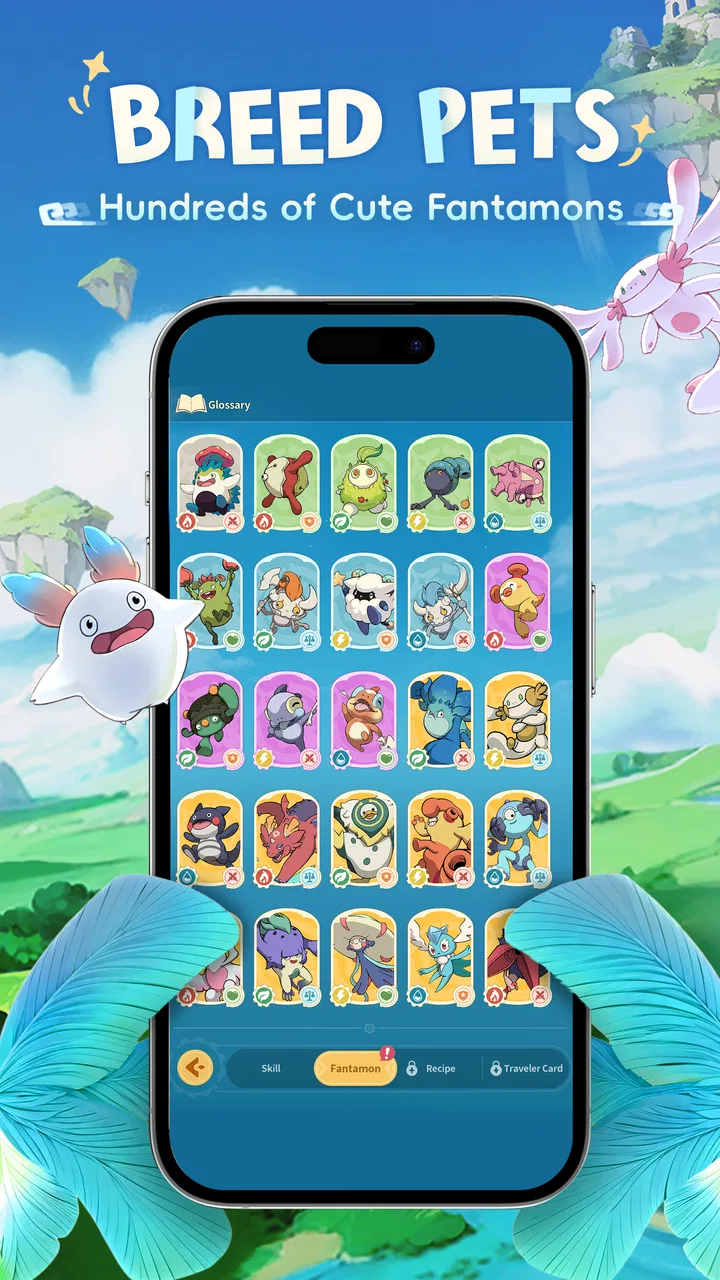
Fantamon: Idle RPG is an engaging game where players collect and train a team of unique creatures called Fantamons. The game combines elements of strategy and role-playing, allowing players to battle against others, complete quests, and level up their team in an idle environment. The idle mechanics ensure progress even when not actively playing.
02Is an internet connection required to play Fantamon: Idle RPG?
While Fantamon: Idle RPG can be played offline, some features require an internet connection. Online connectivity is essential for accessing multiplayer battles, in-game events, and updates. Playing connected also enables cloud saving, ensuring your progress is backed up and can be accessed across multiple devices.
03Are there in-app purchases in Fantamon: Idle RPG?
Yes, Fantamon: Idle RPG includes in-app purchases that enhance the gaming experience. Players can buy virtual currency, special items, and exclusive Fantamons. While the game can be enjoyed without spending money, these purchases can accelerate progress and provide additional customization options. Always check parental controls if children have access to the game.
04What age group is Fantamon: Idle RPG appropriate for?
Fantamon: Idle RPG is designed to be suitable for a wide audience, including younger players. The game features colorful graphics and simple mechanics, making it accessible to children and adults alike. However, parents should be aware of in-app purchases and ensure appropriate settings are in place for younger users.
05How does the leveling system work in Fantamon: Idle RPG?
In Fantamon: Idle RPG, the leveling system is based on experience points gained from battles and quests. Each Fantamon can be leveled up to enhance its abilities and unlock new skills. The idle nature of the game means that your Fantamons continue to gain experience even when you're not actively playing, making progression smooth and rewarding.
Pros
- Engaging storyline with unique fantasy elements.
- Stunning graphics enhance the gameplay experience.
- Smooth performance even on older devices.
- Regular updates with new content and features.
- User-friendly interface for easy navigation.
Cons
- In-app purchases can be quite expensive.
- Requires stable internet for optimal play.
- Some levels can feel repetitive.
- Limited character customization options.
- Notifications can be overly frequent.

Fantamon: Idle RPG
Gallery